
Flea treatment for your home, from carpet to baseboard.
Bites around the ankles, a pet that won't stop scratching, or specks that jump when you get close. We treat every life stage — adults, larvae, and the stubborn pupae — so the biting actually stops. Serving Williamsport and North-Central Pennsylvania since 1985.
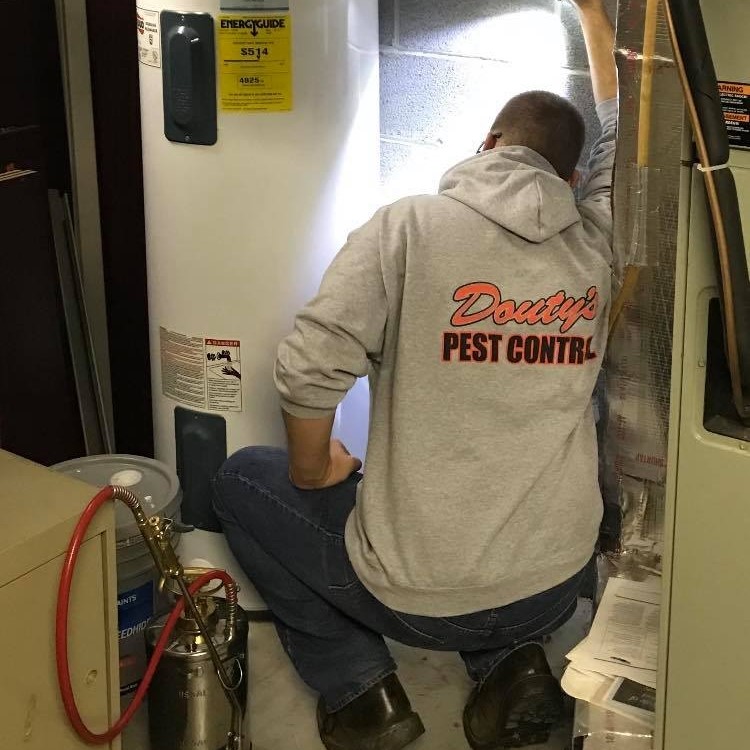
We treat every life stage, not just the adults.
For every adult flea you see, dozens of eggs, larvae, and pupae are developing in carpet fibers and pet bedding. Sprays that only kill adults leave the next generation ready to hatch. We treat the areas where fleas develop and time the work so the population doesn't rebound.
- A straight price before any work begins
- Treatment aimed at eggs and larvae, not just biting adults
- Safe around kids and pets when guidelines are followed
How we treat fleas.
Find where they're developing
Fleas concentrate where pets rest — bedding, carpet, upholstery, and shaded spots outside. We inspect those areas to confirm fleas and map out what needs treatment.
Treat every life stage
Adult fleas are a fraction of the problem; most of the population is eggs, larvae, and pupae in the carpet. We use treatments that address the full cycle, and explain any prep — like vacuuming and washing pet bedding — before we start.
Follow up and coordinate
Pupae can hatch for weeks after treatment, so we tell you what to expect up front. Treating your pet through your veterinarian at the same time is what makes results stick — with a straight price before any work begins.
What to know about fleas.
Small, fast, and built to persist. Here's what fleas look like, how they get in, and why they outlast most do-it-yourself treatments.
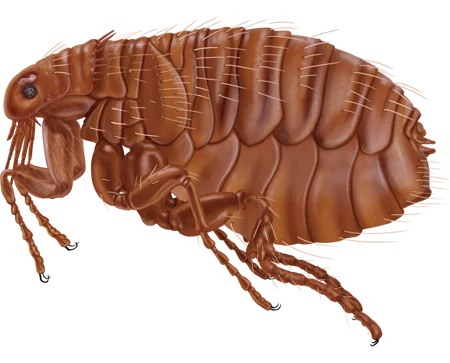
Fleas are tiny, flattened side-to-side, and dark reddish-brown, with back legs that launch them many times their body length. You'll usually spot them as jumping specks on pets, pet bedding, socks, or light-colored carpet.
- Size
- About 1/8 inch
- Legs
- 6 — built for jumping
- Wings
- No
- Bites
- Yes — itchy bites, often at the ankles
- Color
- Reddish-brown
- Carry disease
- Can transmit tapeworm to pets
- Damage property
- No
- Most active
- Summer & early fall
A closer look at fleas.
Most of the population is invisible
Adult fleas are only about five percent of an infestation. The rest is eggs, larvae, and pupae developing in carpet, bedding, and floor cracks — which is why killing the adults you see doesn't end the problem.
The pupal stage is the stubborn one
Flea pupae are protected in cocoons that resist treatment, and they can wait weeks before hatching. Seeing a few fleas after a treatment is normal — it's the cocooned stragglers emerging, not the treatment failing.
Pets are the usual ride in
Dogs and cats pick up fleas outside or from other animals and carry them to the places they rest. Treating the home without treating the pet — or the other way around — usually means the cycle restarts.
Homes without pets get them too
Wildlife — feral cats, raccoons, opossums, squirrels — drop flea eggs in yards, crawl spaces, and attics. Fleas can also stay behind in a home after a previous owner's pets are long gone.
They're more than an itch
Flea bites can trigger allergic reactions in pets and people, and fleas transmit tapeworm to dogs and cats. Heavy infestations can even cause anemia in small animals.
Vacuuming is part of the treatment
Vacuuming before and after treatment picks up eggs, stimulates pupae to hatch into the treated area, and speeds the whole process. We'll tell you exactly what prep helps most.
Easy to confuse with bed bug or mosquito bites
Bites alone don't identify the pest. Flea bites cluster around ankles and lower legs; bed bug bites tend to show up on skin exposed while sleeping. The treatments are completely different, so a photo or inspection is worth it before you treat anything.
Signs of a flea problem.
Bites around the ankles
Small, itchy red bumps on ankles and lower legs — where fleas jumping from the carpet land first.
A pet that won't stop scratching
Persistent scratching, biting at the fur, or hair loss near the tail base are classic signs of fleas on a dog or cat.
Jumping specks
Tiny dark insects that vanish with a hop from carpet, bedding, furniture, or white socks.
Flea dirt
Black pepper-like specks in pet fur or bedding that turn reddish when wet — digested blood left behind by adult fleas.
Careful treatment. Real respect for your space.
Flea work means carpets, couches, and the rooms where your family and pets spend the most time. Our technicians show up ready for that: shoe covers on, focused on the areas fleas actually use, and clear about what we're doing before we start.
- Shoe covers and careful indoor work
- Clear prep instructions and re-entry guidance
- A local tech you can talk to on site
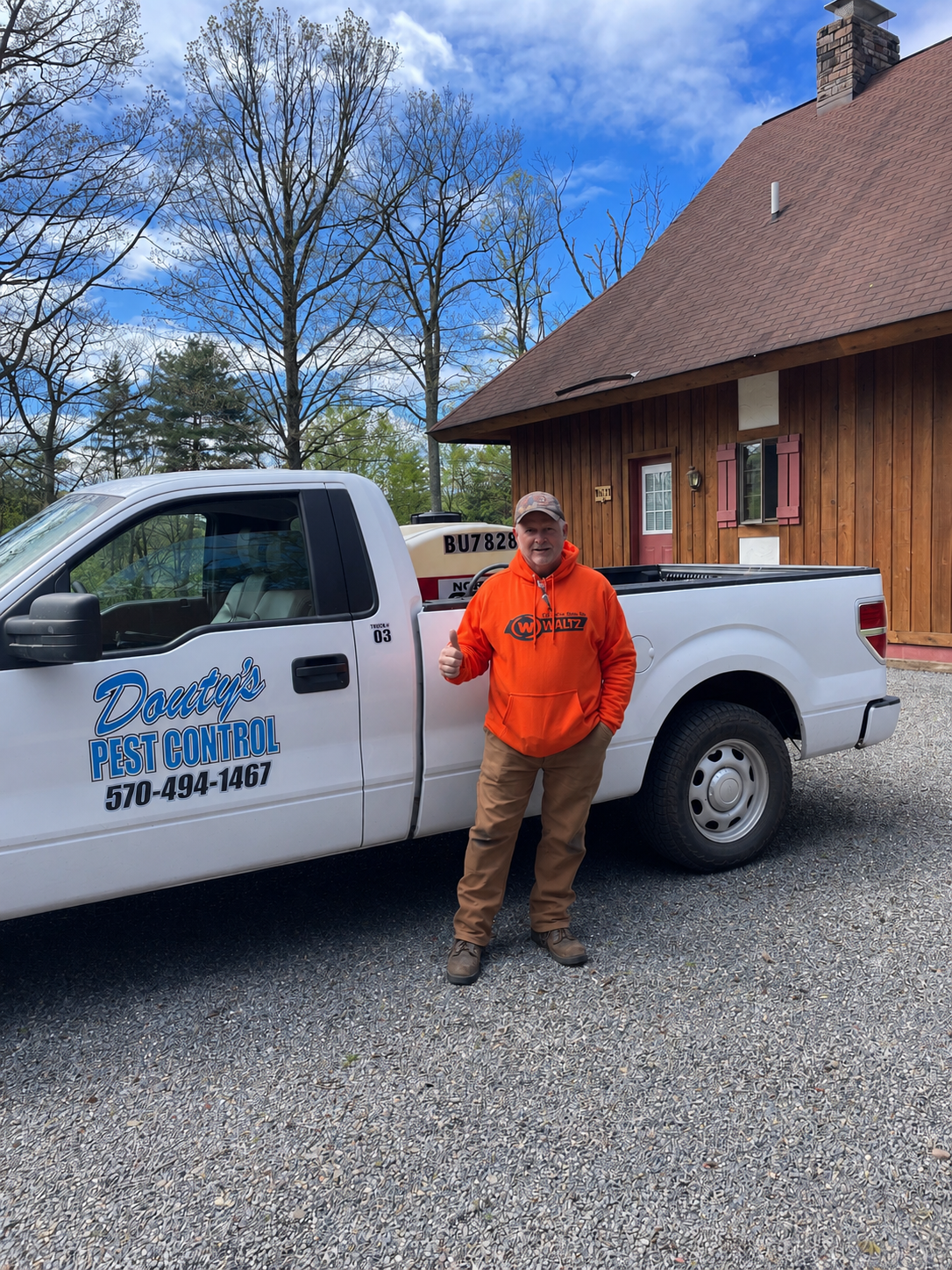
Towns we cover
Same (570) 494-1467 number for Williamsport and the North-Central towns on the route.
Need residential pest control or a commercial program?
Related: Bed Bugs · Rodents · All pests we treat
Questions we hear a lot.
We inspect first to find where fleas are developing, then treat carpets, baseboards, and rest areas with products that address adults and the immature stages. You get prep instructions and a clear price before we start.
Yes — home treatment and pet treatment work together. Talk to your veterinarian about a flea product for your pet; we handle the environment where the eggs and larvae are developing.
Flea pupae are protected in cocoons and can hatch for a few weeks afterward. The treatment intercepts them as they emerge. Regular vacuuming during that window speeds it up, and we'll tell you if a follow-up visit makes sense.
Our licensed PA technicians use targeted treatments and will walk you through prep and re-entry timing for your home before we begin.
Wildlife around the home, a previous owner's pets, or even a single visit from an animal carrying fleas can seed an infestation. An inspection will find where they're coming from.
Ready to get rid of fleas?
Call the Williamsport office and describe what you're seeing. Free estimate, no pressure.