Bee, hornet, and wasp removal done safely.
A nest under the eaves, yellowjackets in the ground by the walkway, or hornets in a tree near the deck. We identify what's nesting, remove it with the right protective equipment, and treat so it doesn't rebuild. Serving Williamsport and North-Central Pennsylvania since 1985.
This is one job worth leaving to a professional.
Knocking down a wasp nest with a broom or a can of spray is how most sting incidents happen. Yellowjackets and hornets defend their nests aggressively, and some colonies hold thousands of insects. We come equipped for it — protective gear, the right products, and the timing to treat when the colony is home.
- A straight price before any work begins
- Proper protective equipment and safe timing
- Nest material removed where practical
How we handle stinging insects.
Identify what's nesting
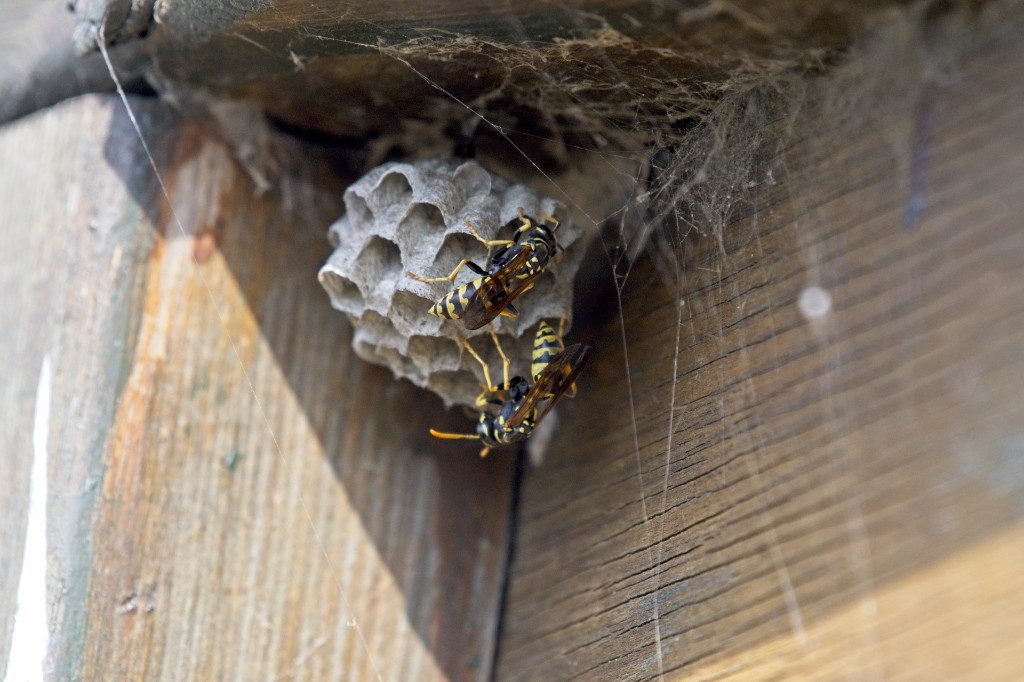
Paper wasps, yellowjackets, bald-faced hornets, and carpenter bees all behave differently and nest in different places. We confirm the species and locate the nest before anything gets treated.
Safe removal and treatment
With proper protective equipment and the right timing, we treat or remove the nest — eaves, soffits, wall voids, or in-ground colonies — when the colony is home and the job can be finished in one visit.
Keep them from rebuilding
We remove nest material where it's practical and point out the conditions that attracted them, so the same spot doesn't host a new colony next season — with a straight price up front.
What to know about bees, hornets, and wasps.
Not every stinging insect is a threat, and not every nest needs removal. Here's how to tell what you're dealing with and when to call.
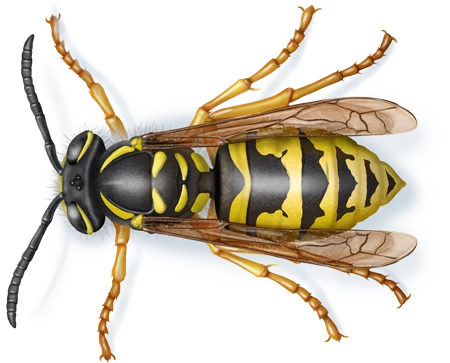
Paper wasps are slender with long legs and open, umbrella-shaped nests. Yellowjackets are compact, bright yellow and black, and often nest in the ground or in wall voids. Bald-faced hornets are larger, black and white, and build big gray paper nests in trees and on structures. Carpenter bees are large with a shiny black abdomen, and leave perfectly round holes in bare wood.
- Size
- 1/2 to 1 inch (species vary)
- Legs
- 6
- Wings
- Yes
- Stings
- Yes — wasps and hornets can sting repeatedly
- Color
- Yellow and black, white and black, or brown
- Carry disease
- No — stings are the health concern
- Damage property
- Minor — nests in walls, eaves, and soffits
- Most active
- Late summer & early fall
A closer look at stinging insects.
Wasps and hornets sting more than once
Wasps and hornets keep their stinger and can sting repeatedly. A disturbed colony can deliver dozens of stings in seconds, which is why nest removal without protective gear is risky.
Colonies peak in late summer
A nest that started with one queen in spring can hold hundreds to thousands of workers by August. That's when colonies are largest, most defensive, and most likely to cross paths with people.
Yellowjackets often nest out of sight
Ground nests along walkways and colonies inside wall voids are common. If you see steady traffic in and out of a hole in the ground or a gap in siding, don't plug it — that can push them into the house.
Bald-faced hornets are wasps, not true hornets
The big gray football-shaped nests in trees and on siding belong to bald-faced hornets, which are actually a type of yellowjacket. They defend the nest hard and will chase, which is why a nest near a door or deck is worth treating early.
Stings are the real health risk
For most people a sting means pain and swelling. For those with allergies it can be an emergency. Multiple stings from a defended nest are dangerous for anyone — a strong reason not to handle removal yourself.
Old nests don't get reused, but sites do
Wasps and hornets build new nests each year, but a protected spot that hosted a nest once — an eave, a shed, an attic vent — tends to attract new queens the following spring.
Carpenter bees are often mistaken for bumble bees
Both are large and loud, but carpenter bees have a shiny black abdomen and bore perfectly round holes into decks, fascia boards, and railings. Bumble bees are fuzzy all over and nest in the ground. The treatment is different, so a clear ID matters.
Signs of a stinging insect problem.
A visible nest
Umbrella-shaped paper combs under eaves, large gray enclosed nests in trees or on siding, or mud tubes and round holes in wood.
Steady traffic to one spot
Insects flying in and out of a hole in the ground, a gap in siding, or a soffit vent usually means a colony inside.
Buzzing in a wall or ceiling
An audible hum behind drywall can mean a yellowjacket colony in the void — worth addressing before it grows.
More activity around food and trash
Late-summer yellowjackets scavenging around grills, garbage cans, and outdoor meals point to a nest somewhere nearby.
Careful work. Real respect for your space.
Stinging insect work happens around the places your family uses most — decks, doorways, play areas, and garden beds. Our technicians treat with that in mind: they tell you when to keep kids and pets clear, work the nest without unnecessary mess, and walk you through what was done before they leave.
- Clear guidance on keeping a safe distance during treatment
- Nest removal where practical, not just a quick spray
- A local tech you can talk to on site
Towns we cover
Same (570) 494-1467 number for Williamsport and the North-Central towns on the route.
Need residential pest control or a commercial program?
Related: Spiders · Ants · All pests we treat
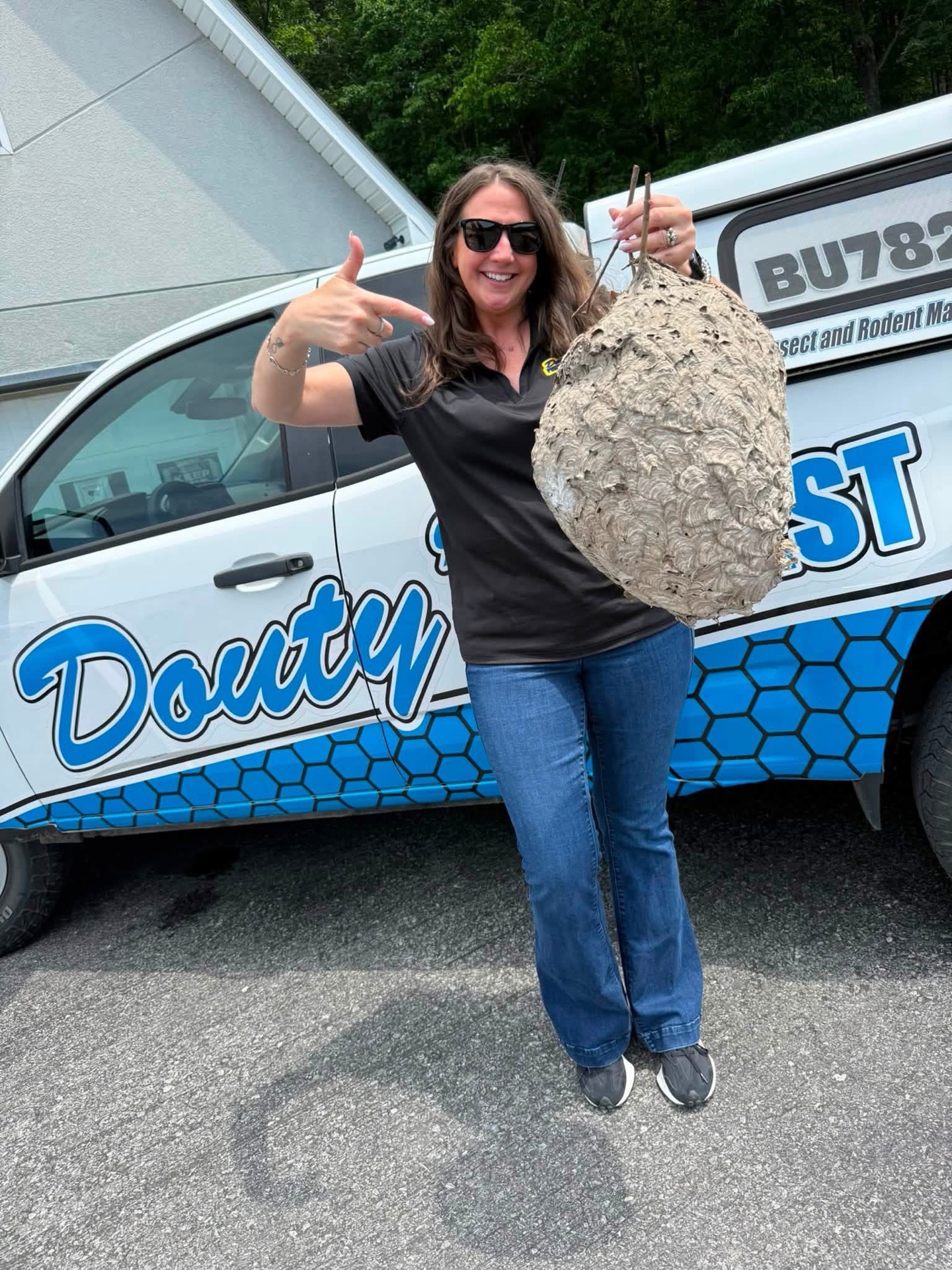
We take the nest. You stay back.
A bald-faced hornet nest this size is thousands of insects that sting to defend it. One broom or a can of spray is how people get hurt. We suit up, treat the colony, and take the nest with us. Straight price before we start.
Questions we hear a lot.
We confirm the species and nest location first, then treat with proper protective equipment at a time when the colony is in the nest. Where practical, we remove the nest material afterward. You get a clear plan and price before we start.
Early in the season, while the colony is still small, is cheapest and safest. Later in the summer we time the visit for when the colony is in the nest — usually early morning or evening — so the treatment reaches the whole colony instead of the few workers out foraging.
No. We do not treat honey bees. If you have a swarm on a branch or bees moving into a wall, contact a local beekeeper or a swarm-removal list — they can relocate the colony alive, and that is the right outcome for pollinators. We handle wasps, hornets, yellowjackets, and carpenter bees.
Store-bought sprays reach the outside of the nest and rarely the colony inside — and a partly treated nest is an angry one. Wall-void and ground nests especially are jobs for protective gear and experience.
Yes, with the right precautions. Our licensed PA technicians will tell you when to keep kids and pets clear during treatment and what to expect afterward.
Wasps and hornets build a new nest each season, but attractive spots do get reused by new queens. We point out the conditions worth fixing so the same corner doesn't host a colony again.
Ready to get rid of the nest?
Call the Williamsport office and describe what you're seeing. Free estimate, no pressure.